Spicy Hobak Jjigae (Korean Squash Stew) with Pork & Tofu. Fish sauce, garlic, ginger, green chili pepper, green onion, ground black pepper, hot pepper paste, onion, pork belly, pork shoulder, potato, sesame oil, tofu, water. Gochujang adds lots of spicy, robust flavors to this simple stew made with summer zucchini and potatoes. For vegetables, zucchini and potatoes are typical for this stew.
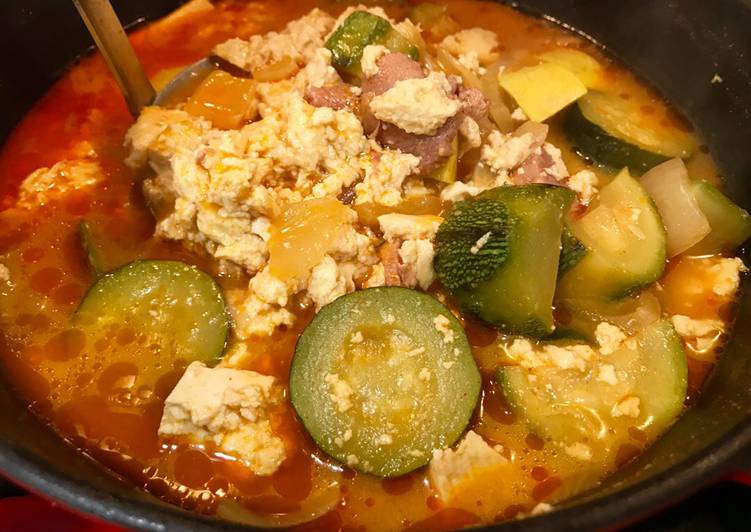 Gochujang Hobak Jjigae or Meatless Zucchini Mushroom stew is my favorite stew for a homestyle Korean dinner.
Shitake broth makes it extra flavorful.
My light and meatless take on a classic Korean stew that traditionally uses beef or pork.
You can have Spicy Hobak Jjigae (Korean Squash Stew) with Pork & Tofu using 9 ingredients and 5 steps. Here is how you achieve that.
Gochujang Hobak Jjigae or Meatless Zucchini Mushroom stew is my favorite stew for a homestyle Korean dinner.
Shitake broth makes it extra flavorful.
My light and meatless take on a classic Korean stew that traditionally uses beef or pork.
You can have Spicy Hobak Jjigae (Korean Squash Stew) with Pork & Tofu using 9 ingredients and 5 steps. Here is how you achieve that.
Ingredients of Spicy Hobak Jjigae (Korean Squash Stew) with Pork & Tofu
- You need 1/2 of onion, diced.
- Prepare 1-2 of jalapeños, cut into 1/8" thick slices.
- Prepare 2-4 of garlic cloves peeled and smashed (or chopped).
- It's 1/2 pound of pork shoulder, thinly sliced.
- It's 1/4 cup of dwenjang (Korean soybean paste) OR miso (which is the Japanese version).
- Prepare 1/4 cup of gochujang (Korean chili paste).
- Prepare 4 cups of water.
- It's 4 cups of calabacita squash or zucchini, cut into 1/2" thick slices (about 2 to 3 medium squashes).
- Prepare 1 (14 oz.) of package tofu (can be any firmness).
The broth is made with dried anchovy stock so it's not. This spicy kimchi jjigae (kimchichigae) or kimchi stew is a favorite winter meal in Korea. It is best served with white rice to help balance the heat. Kimchi stew (kimchi jjigae or kimchichigae) combines kimchi with other ingredients such as beef, onions, garlic, and tofu.
Spicy Hobak Jjigae (Korean Squash Stew) with Pork & Tofu step by step
- Put all ingredients except squash and tofu in a pot, cover, turn the heat to medium high, and cook for 15 minutes..
- Give the jjigae a few good stirs. You'll see the jjigae change color as the dwenjang and gochujang dissolve into the broth. Let the jjigae continue cooking uncovered for 2 to 3 minutes until it comes to a boil..
- Add squash, give it a few good stirs, and cook another 15 minutes covered..
- Crumble tofu into the jjigae. (This is not typical - usually it's cut into cubes or slices - but I like it this way because the tofu picks up more flavor from the broth.) Cover and cook another 10 minutes. Don't worry that the broth is constantly boiling rather than simmering. Jjigae gets its well developed pungency from this constant application of higher heat and the resulting compounding, melding, and reduction of flavors..
- At this point, give everything another good stir and see if you need to adjust the seasoning. If it tastes fine, you're done. If a little too salty, add a touch of water. If you want more saltiness, you can add a little more dwenjang and/or gochujang, remembering that the gochujang is much hotter (as in spicy) than the dwenjang. If you do adjust the seasoning, let it boil another 4 or 5 minutes to let the new level of seasoning meld. That's it. Enjoy!.
It is meant to be eaten slowly, and. Serve with rice and you will have the spicy Korean comfort on either cold and hot day! Here is one recipe I'd like to introduce to you. This spicy pork and zucchini stew (호박 고추장 찌개, hobak gochujang jjigae) originated from the Jeonla province, the southwestern part of Korea. Sundubu Jjigae is Korean stew made with soft (uncurdled) tofu.